


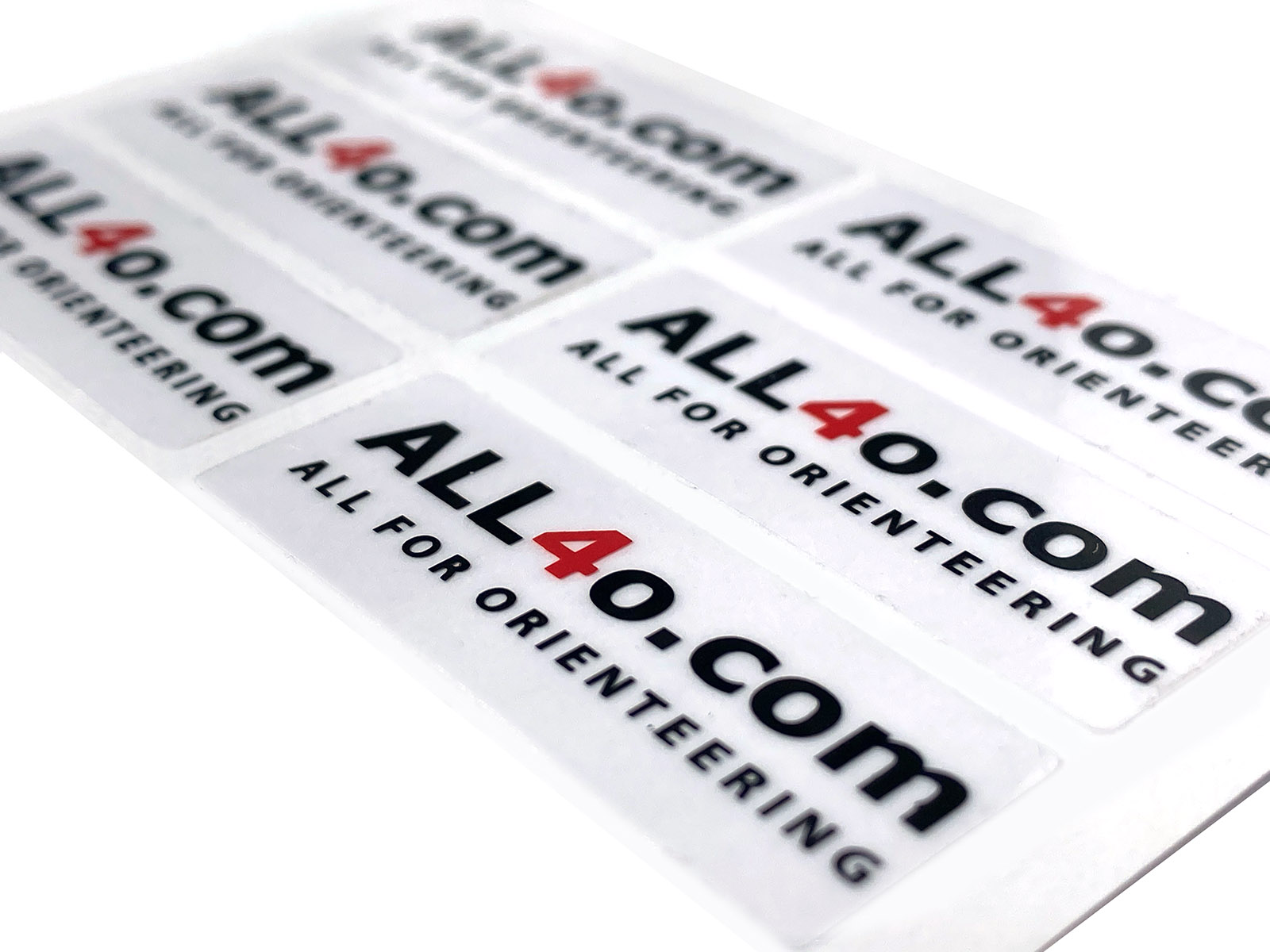
A sticker seems simple until you have to choose a specific option. Paper or film? Glossy or matte? Rectangle or die-cut shape? Will it survive moisture, sunlight and a fridge? Here is what we as a print house explain to clients most often, so you can pick the sticker or label that fits your purpose right away.
Sticker or label — what is the difference?
In everyday speech the two words are often used interchangeably, but there is a practical difference. A label usually carries information: what is inside, who made it, the price or how to use it. A sticker is more often a brand, decorative or promotional element. Both are produced the same way, on self-adhesive material made of a face layer, an adhesive and a backing liner.
What matters is that the material requirements can differ. A food label has to withstand moisture and greasy hands, while a laptop sticker should peel off without leaving residue.
Material: paper or film
This is the most important decision, because it determines how durable the sticker will be.
- Paper stickers are economical and suit dry, indoor use: jars, boxes, gift packaging, event signs. They can swell in damp conditions.
- Polypropylene (PP) film resists moisture and grease. It is the usual choice for cosmetics, cleaning products and foods kept in the fridge.
- Vinyl (PVC) film is flexible and weather-resistant, so it is used for outdoor stickers, vehicles and windows.
- Transparent film creates a "no-label" look on glass and plastic, because only the logo or text is visible.
Finish: glossy, matte or varnished
The finish affects both the look and the durability. A glossy sticker makes colours brighter and shows photographs well. A matte sticker looks calmer and more premium, which is why premium brands, cosmetics and craft products often choose it. Extra lamination or varnish protects against scratches, sunlight and chemicals, which matters for stickers used outdoors or handled often.
If you want special effects such as spot varnish or foil accents, we can walk you through the
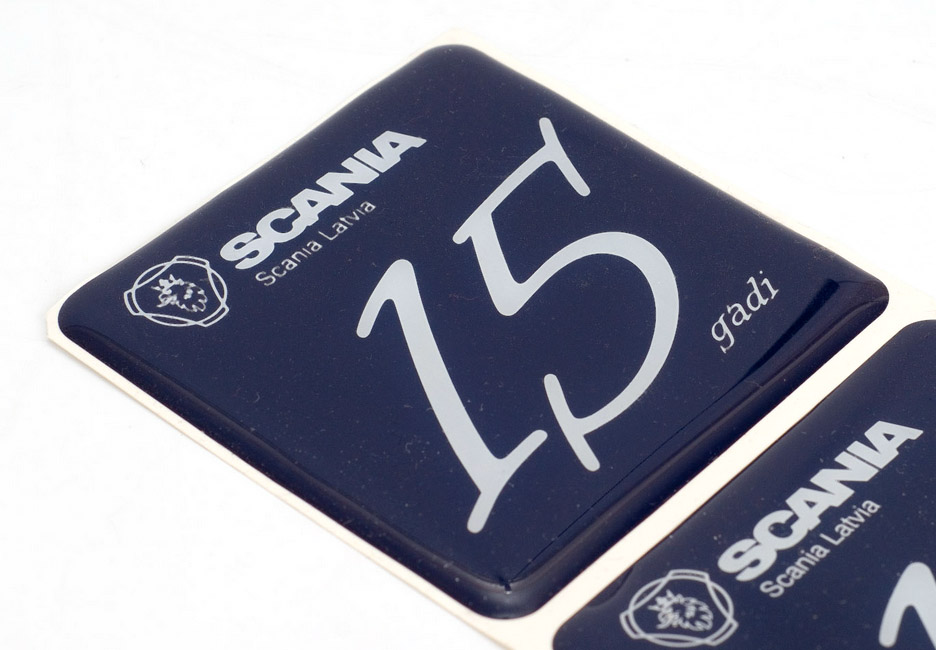
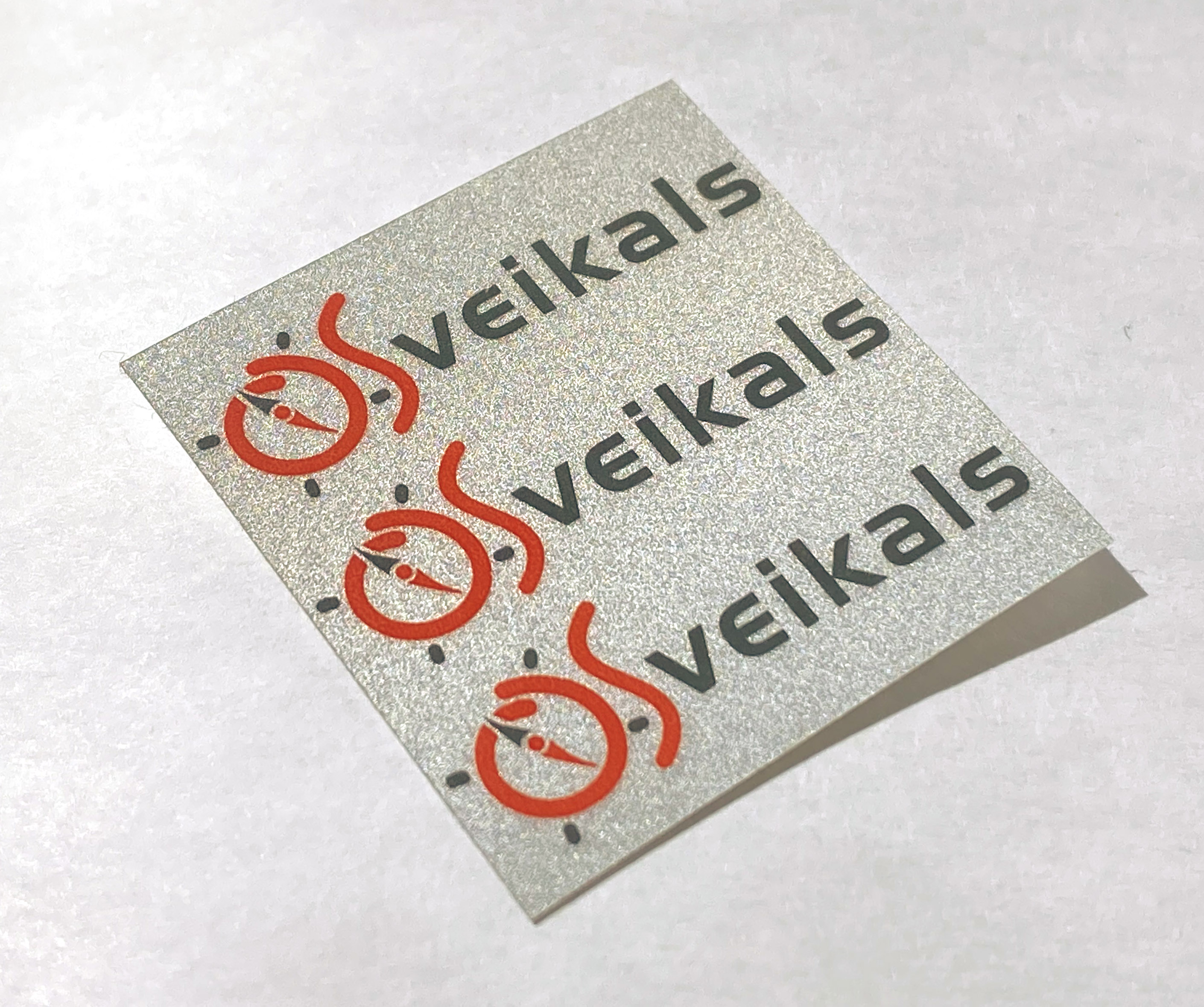
m separately. They do not require a new design, but they noticeably raise perceived quality.
Shape and cutting
Stickers do not have to be rectangular. They can be cut into any shape: following your logo outline, as a circle, an oval or a completely unique silhouette. There are two main options:
- Kiss-cut — the sticker is cut but stays on the shared backing. Convenient on a roll or sheet, and easy to peel off.
- Die-cut — the sticker is cut together with its backing. It arrives as a separate piece and works well as a giveaway or an extra in an order.
A custom shape is a great way to stand out, but a complex outline can slightly increase production cost. If the budget is tight, a circle or oval is often a good compromise.
Which sticker for which situation
- Product labels for jars, bottles, tubes. Choose PP film if the product meets moisture or a fridge, and paper if it stays dry. Finish — matte or glossy to match your brand style.
- Stickers for packaging and boxes. Paper or film with a strong adhesive that holds well on cardboard. If the pack is opened, consider tamper-evident seals. See also our packaging solutions.
- Window and glass stickers. Use vinyl or transparent film. If the sticker must be visible from both sides, a special solution is needed — tell us where it will go and we will advise.
- Promotional and brand stickers. These are often given to customers. Bright colours, an interesting shape and durable vinyl let them last on phones, laptops and bottles.
- Outdoor stickers. Vinyl with a laminate that protects against UV and rain is a must. For bigger sizes, also see our large format printing.
- Price tags and small information labels. Paper rolls are practical and economical, and can be used with a label printer or applied by hand.
Roll or sheets?
Labels are often ordered on a roll, especially when applied by machine or in large volumes. In that case, specify the core size and the unwind direction. If labels are applied by hand and the quantity is small, a sheet with several stickers may be handier — it is easier to store and hand out.
How to prepare your file
To get the result you expect, follow a few basics:
- Use vector files for logos and text so the outline stays sharp.
- Add 2–3 mm of bleed around the design.
- Keep important text at least 2 mm from the cutting line.
- For a custom shape, send the cutting contour as a separate layer.
- Prepare colours in CMYK mode to reduce differences between screen and print.
If you are unsure, just send us your artwork and we will check it and tell you what to fix.
How many to order and how to save
For small runs and varied designs, digital printing is a good fit: you can order a small quantity and easily change versions. The larger the quantity, the lower the price per piece, so if your design will not change, it makes sense to plan the order for a longer period. If you are testing the market or making seasonal variants, smaller volumes are often the safer route.
What to do next
The simplest way to decide is to answer four questions: where the sticker will be used, whether it will meet moisture or sun, what look you want, and how many pieces you need. With those answers we will help you choose the material, shape and finish.
