


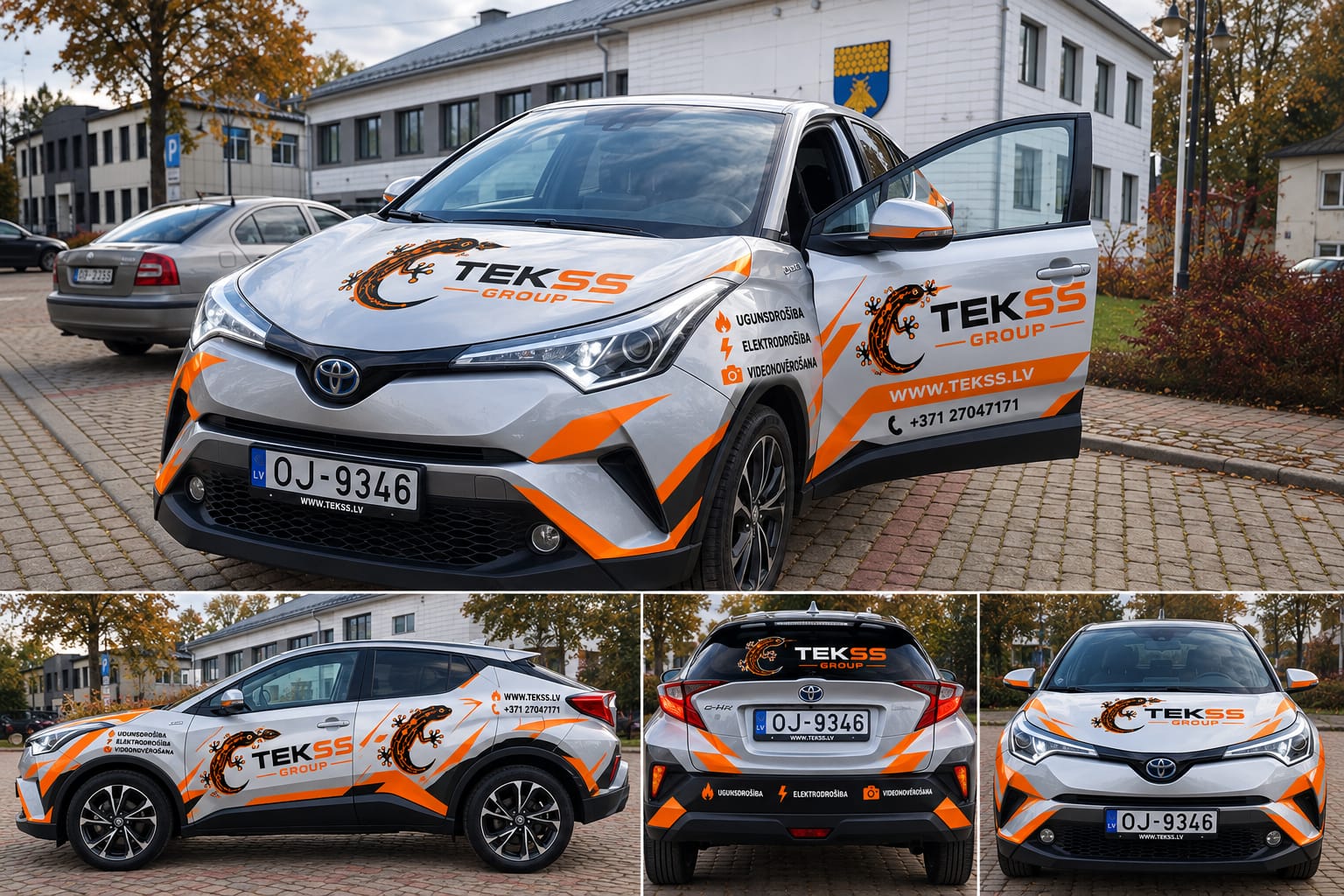
A customer pulls up in a company van and asks us the same thing almost every time: “So how long will this last?” The honest answer is: it depends. And not only on us. The film and the installation are half the story. The other half is written by where the van sleeps at night, how it gets washed, and whether someone attacks a wrapped door with an ice scraper in January.
So here’s what we actually see in the workshop: what shortens a wrap’s life, what stretches it, and how to tell it’s time for a new one.
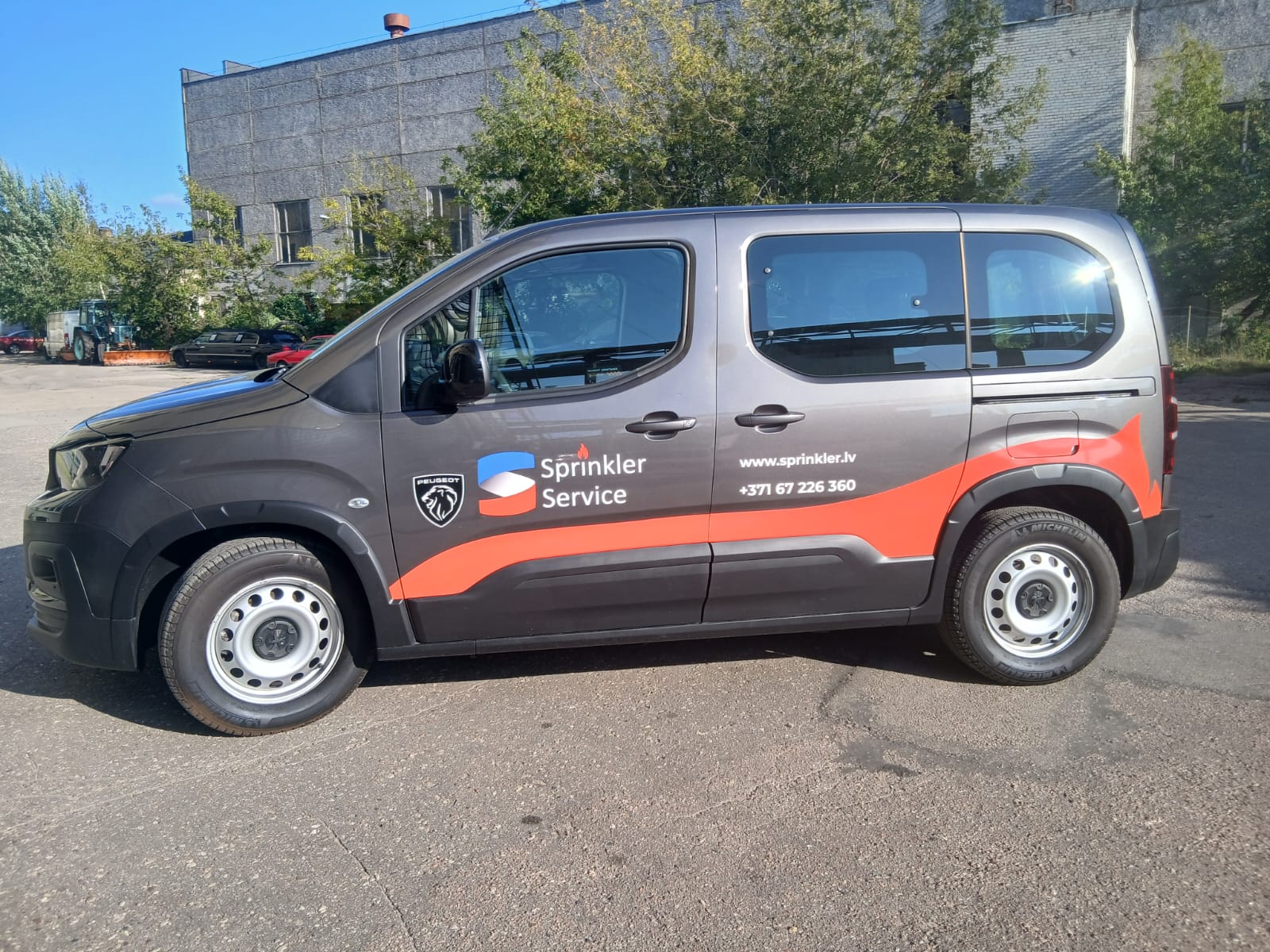
How many years you can expect
It starts with the type of film. Full wraps and fleet graphics are usually done with cast vinyl. It’s thin, follows curves well and barely shrinks over time. Manufacturers typically rate it at around 5 to 7 years on vertical surfaces, and some of the pricier ranges for longer.
Cheaper calendered vinyl is thicker and stiffer. On flat surfaces, like the side of a truck or a short promo campaign, it’s a perfectly sensible choice. But it doesn’t last as long, and on curves it tends to wrinkle and lift at the edges after a while.
One more thing people rarely think about. Those manufacturer figures are for vertical surfaces. The roof, bonnet and boot lid take direct sun, rain and snow, so the film ages faster there. If your van’s roof looks tired after a few years while the sides still look new, that’s normal.
What wears a wrap out
Sun is enemy number one. UV slowly fades the colours and makes the film more brittle. A car that spends all summer in an open car park with the same side facing south will age unevenly. You see it clearly when an old wrap comes off: one side is still flexible, the other crumbles in your hands.
Other usual suspects:
- Road salt and grit. In winter they work their way into edges and seams and slowly scour the surface.
- Bird droppings, tree sap, bugs. They’re acidic. Leave them on the film for a few hot days and you may get a permanent mark.
- Fuel. A few drips by the filler cap that nobody wipes off will eventually leave the film dull and soft.
- The wrong kind of washing. More on that below, because this is where most of the damage happens.
There’s also something you can’t control yourself: prep before installation. If the paint isn’t properly degreased or the edges aren’t finished right, the film can start lifting within a couple of months. That’s why a good installer will clean the car themselves, even if it’s fresh from the car wash. Wax and spray products from the car wash are exactly what the adhesive doesn’t like.
The first few days
The adhesive needs time to fully bond with the surface. So it’s best not to wash the car at all for the first week. If you really have to, use your hands and plain water, and leave the edges alone.
Don’t panic if you spot a tiny bubble in the first days. Good films have air-release channels in the adhesive, and small bubbles often disappear on their own. But if a bubble is still there after two weeks, or an edge starts to lift, don’t push it with a fingernail or poke it with a pin. Bring the car in. It’s usually a quick fix, as long as dirt hasn’t got under it yet.
How to wash a wrapped car
Hand washing is best: a mild car shampoo, a soft sponge or microfibre mitt, and plenty of water. Start at the top, since most of the grit is lower down.
A touchless pressure wash is fine too, as long as you:
- keep the nozzle at least 30 cm from the surface;
- don’t aim straight at the film edges and seams, because the pressure can lift them;
- skip very hot water;
- hold the jet at an angle rather than straight on.
We’d steer clear of automatic washes with spinning brushes. They scratch the surface, and matte and gloss black films suffer most, because every scratch shows. If there’s really no other option, look for one with soft cloth strips and skip the wax programme.
Dry the car with a soft towel afterwards. Water drops left in the sun leave limescale spots, and on dark films they really stand out.
Matte, gloss or printed: the care isn’t the same
Gloss film is the easiest to live with. You can use care products made for vinyl and even ceramic coatings designed specifically for wraps. Regular car wax with abrasives is best avoided, though.
Matte and satin films need more care. No wax, no polishing. Polishing turns a matte surface shiny, and that patch can’t be fixed, only re-wrapped on that panel. Look for products labelled for matte finishes.
On printed advertising wraps, the printed layer is normally covered with a clear laminate. It protects the inks from UV and scratches. If someone offers you a cheaper version without lamination, think twice. On a vehicle that spends the winter on salted roads, unprotected print fades and wears off much faster. Frankly, this isn’t the place to save money. If you’re curious how we print on vinyl and other big materials, have a look at our large format printing page.

Latvian winter and your wrap
Winter on its own isn’t a problem for vinyl. What we do to our cars in winter is.
First, the ice scraper. On the windows, go ahead. On wrapped panels, never. A snow brush with hard bristles is also best kept away from the doors and bonnet. Push the snow off with a soft brush, or just let it melt in a warm garage.
Second, salt. Keep washing the car through winter, even if less often, and pay attention to the sills and the bottom of the doors. That’s where the salt and grit build up most, and that’s usually where the film wears first.
And one more. If an edge has lifted over the winter, don’t stick it back down with tape or superglue. It only makes the repair harder in spring. Better to bring it in while the damage is small.
A scratch or a dent: does the whole car need re-wrapping?
No, and that’s one of the best things about a wrap. If someone has keyed a door or damaged the bumper, you usually only need to replace the film on that panel.
There is a catch. Film that has been on the car for a couple of years isn’t quite the same shade as fresh film off the roll. It shows most on bright colours and printed images. Sometimes you can’t tell the new piece apart at all, sometimes it’s worth redoing the whole side. Best decided together, looking at the actual car.
If we printed your advertising wrap, ask whether the artwork is still on file. Then a single panel can be reprinted without paying for new design work.
When it’s time to take it off
The signs are pretty clear: colours have visibly faded, the surface has gone dull and rough, there are fine cracks along the edges, or the film is starting to peel.
Don’t put removal off. Film that comes off on time peels away fairly easily and leaves little adhesive behind. But once a wrap is well past its lifespan, the film turns brittle, tears into small pieces and the adhesive bonds to the paint. Then removal takes a lot longer, and so it costs more.
People often ask whether a wrap will damage factory paint. If the paint is original and in good condition, a quality film actually protects it from stone chips and sun. Problems usually come from resprayed panels. If anything on the car has been repainted after an accident, tell us beforehand so we can judge the risk.
Thinking about wrapping a company vehicle, or wondering how much life your current wrap has left? Bring the car over and show us. Once we’ve seen it, we’ll give you an actual price and timeline.
